lab0
product overview
An AI implementation workspace for delivery teams.
Capture context. Structure requirements. Find gaps. Generate artifacts. Configure the work.
FEATURE TOUR 2026
lab0.ai
01 / The problem
Implementation teams lose time because the truth is scattered.
Calls, documents, emails, chat threads, exports, and system screenshots all hold part of the answer. Delivery teams still have to assemble it by hand.
Context is everywhere
Requirements live across meetings, documents, inboxes, channels, and customer systems.
Gaps show up late
Unknowns appear during build, QA, or migration because discovery never became a usable checklist.
Artifacts drift
BRDs, mappings, and runbooks become detached from the evidence that justified them.
Config work repeats
The same account context gets rebuilt for every agent, engineer, and handoff.
02 / What Lab0 does
Lab0 turns scattered implementation context into work a delivery team can ship from.
It keeps discovery, files, evidence, questions, artifacts, process maps, and agent runs in one workspace.
03 / The implementation loop
From raw context to configured systems, in one workspace.
01Capture
Pull in calls, docs, emails, channels, and uploaded files.
02Structure
Compress raw context into questions, requirements, and evidence.
03Find gaps
Separate what is known from what still needs an answer.
04Visualize
Map systems, actors, handoffs, and data flow.
05Generate
Create BRDs, mapping specs, runbooks, and QA artifacts.
06Configure
Use the agent and config plane to do the implementation work.
04 / Context ingestion
Lab0 starts where implementation context already lives.
Upload what you have, connect what the team uses, then let Lab0 compress the raw material into implementation-ready knowledge.

Google Drive
shared folders
05 / Discovery becomes answer management
A central place to know what is answered and what still blocks implementation.
Lab0 auto-fills the discovery questionnaire from known context, then turns the missing pieces into focused questions.
Already known
- Requirements found in files and transcripts.
- System names, owners, and handoffs.
- Fields, mappings, constraints, and approvals.
- Evidence attached to each answer.
Still needed
- Open implementation decisions.
- Missing field definitions and edge cases.
- Unknown source of truth or owner.
- Questions to ask on the next call.
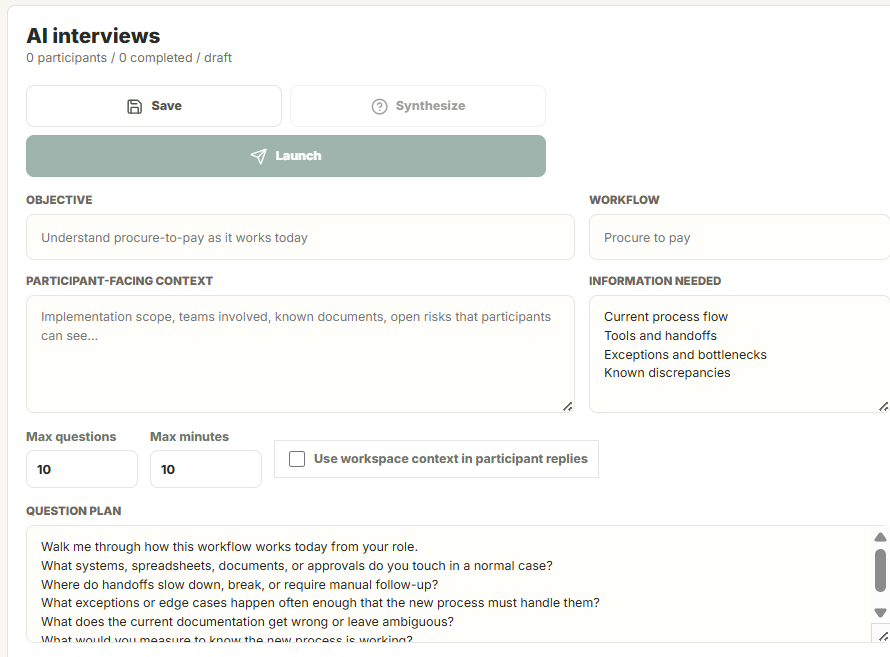
06 / AI interviews
When the client is offline, Lab0 sends the questionnaire for them to fill.
AI interviews turn missing discovery answers into a structured client-facing questionnaire.
- Send focused questions to the right client stakeholders.
- Collect answers asynchronously without another meeting.
- Route completed responses back into the implementation workspace.
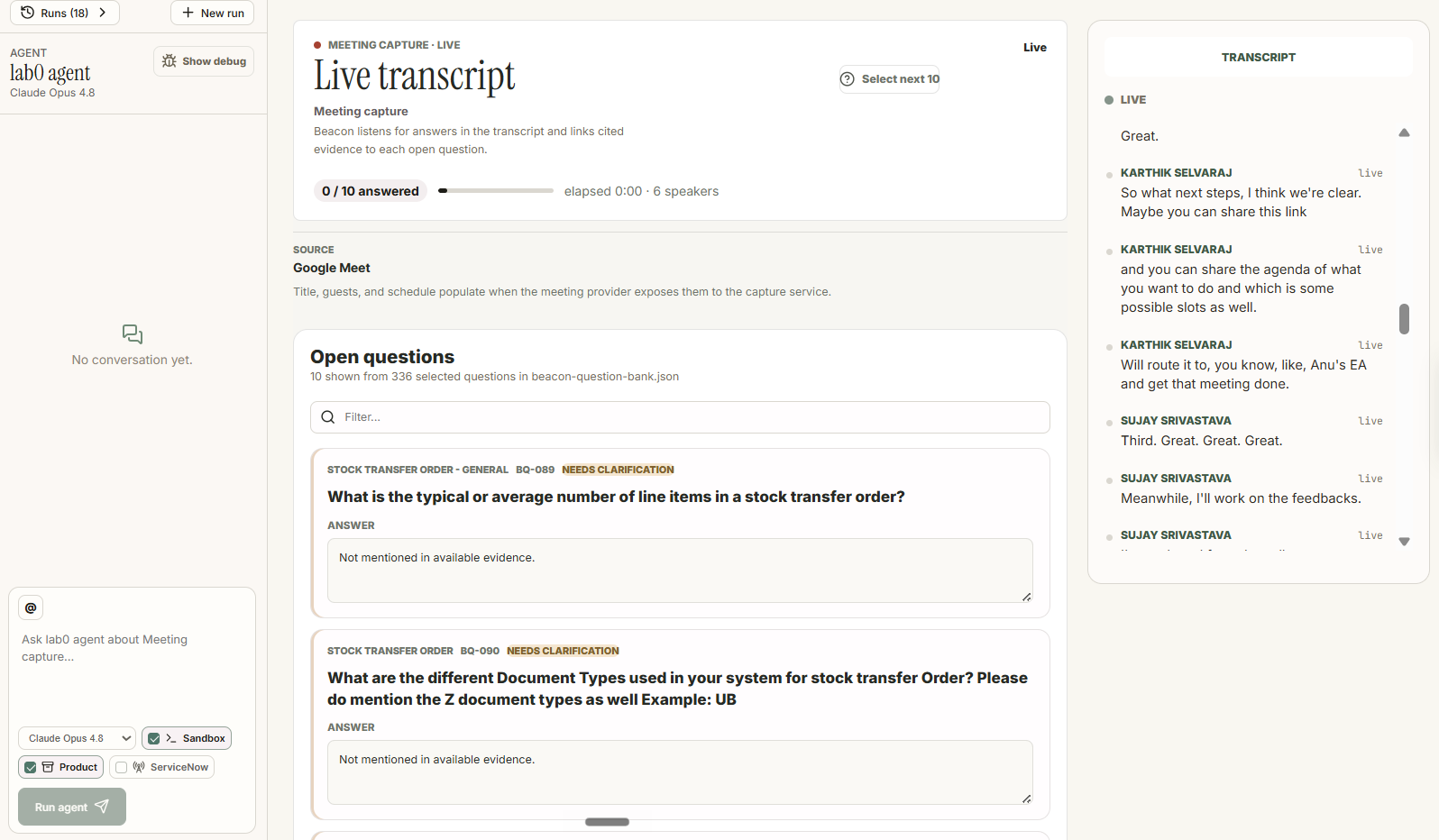
07 / superdiscovery
During calls, Lab0 helps the team ask the questions that matter.
It follows the live conversation, updates the discovery state, and surfaces pending questions while the stakeholders are still in the room.
- Analyze live calls and transcripts as implementation evidence.
- Generate follow-up questions from the gaps in the workspace.
- Keep answers tied to source context.
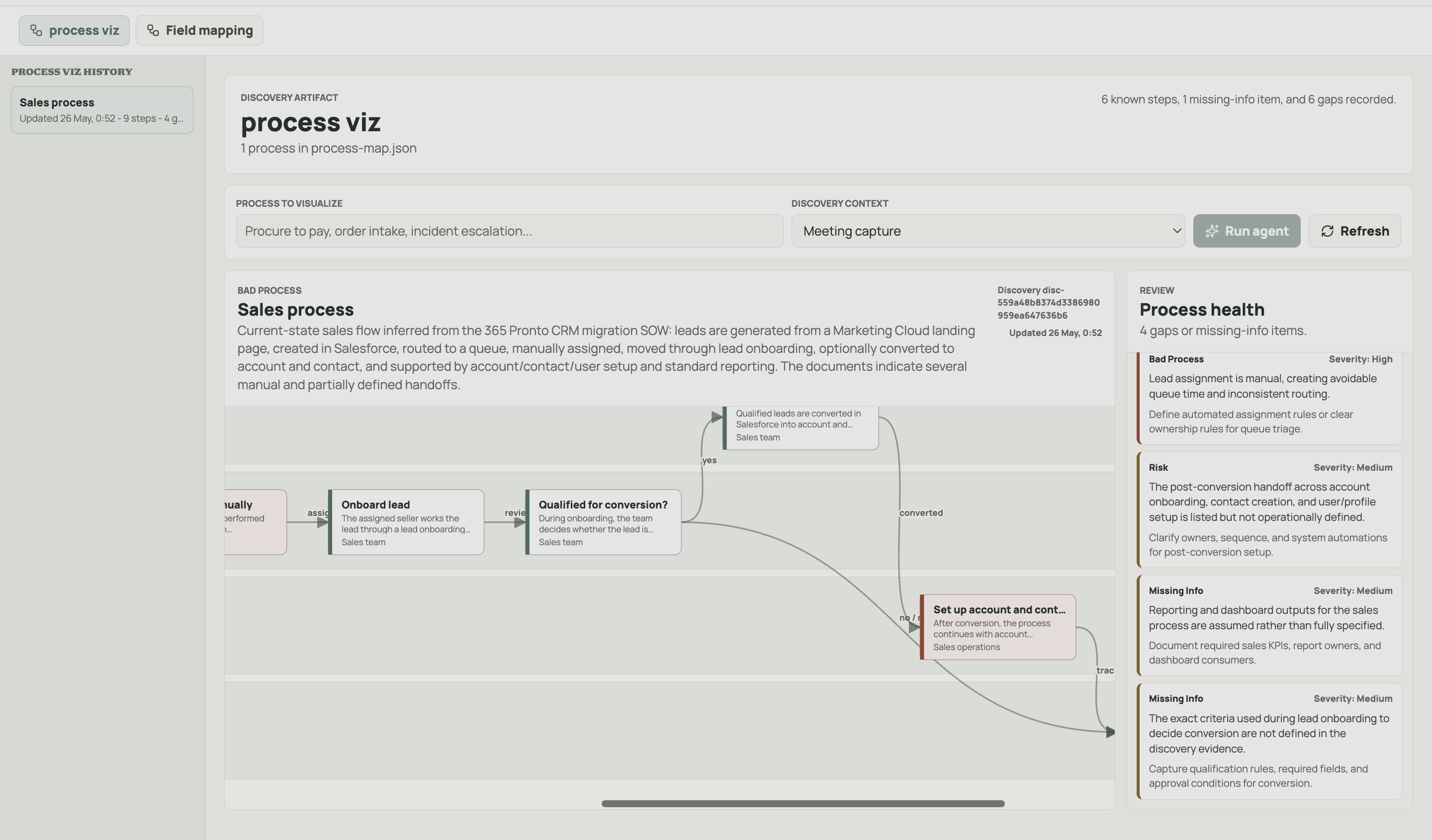
Process visualizer shows their systems and how data flows
08 / story
Built from superdiscovery context. Teams can see actors, systems, handoffs, data flow, and the gaps that need attention before config work starts.
09 / Lab0 agent
The agent turns the workspace into implementation artifacts.
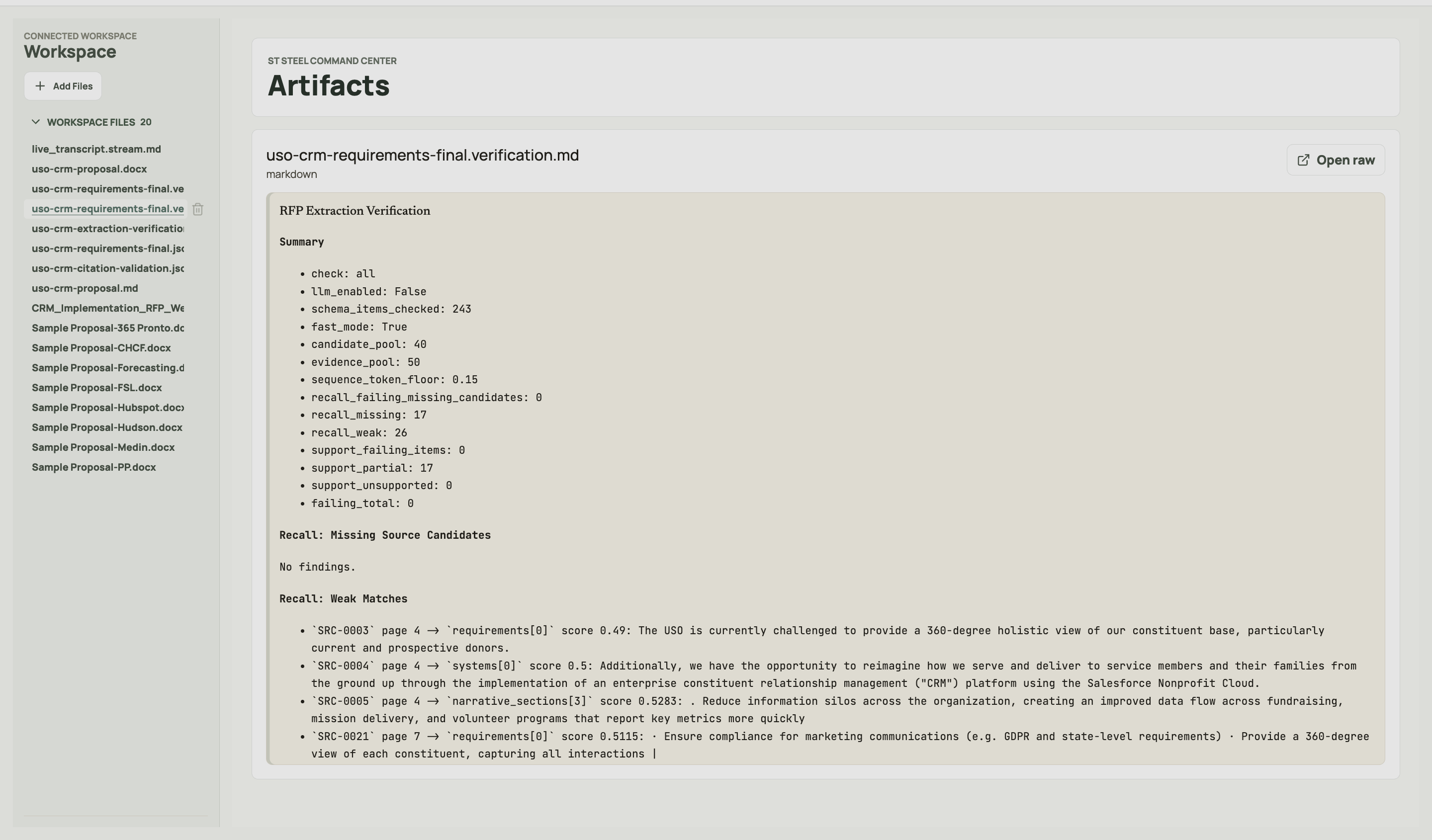
BRDs, mapping specs, migration runbooks, QA plans, and handoff docs are generated from the same evidence base.
- Short operator-style answers for delivery teams.
- Tool traces and run history so the work is reviewable.
- Generated outputs land back in the workspace.
Artifacts BRDs, mapping specs, migration runbooks, and delivery outputs
10 / story
Every output stays attached to the files, calls, answers, and decisions that produced it.
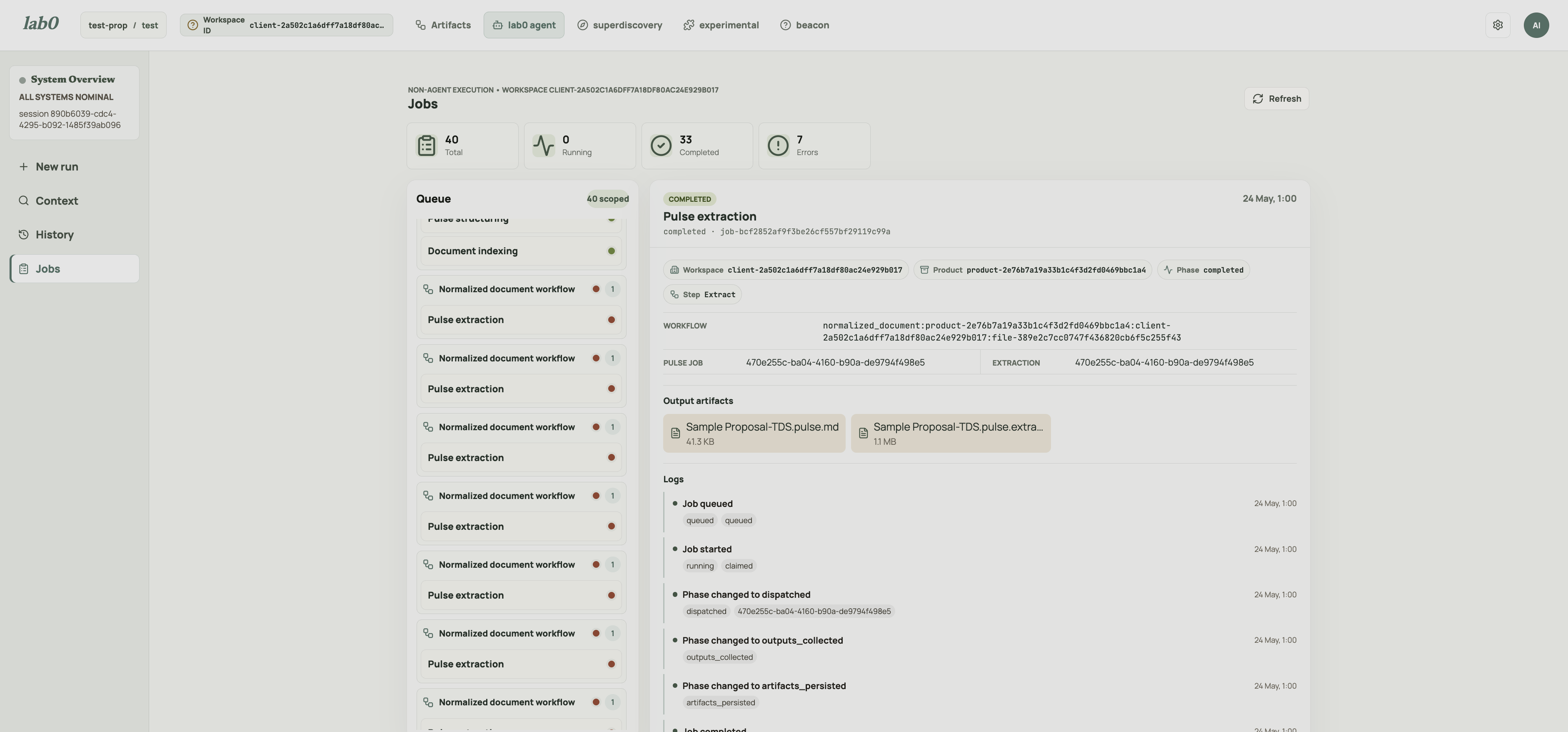
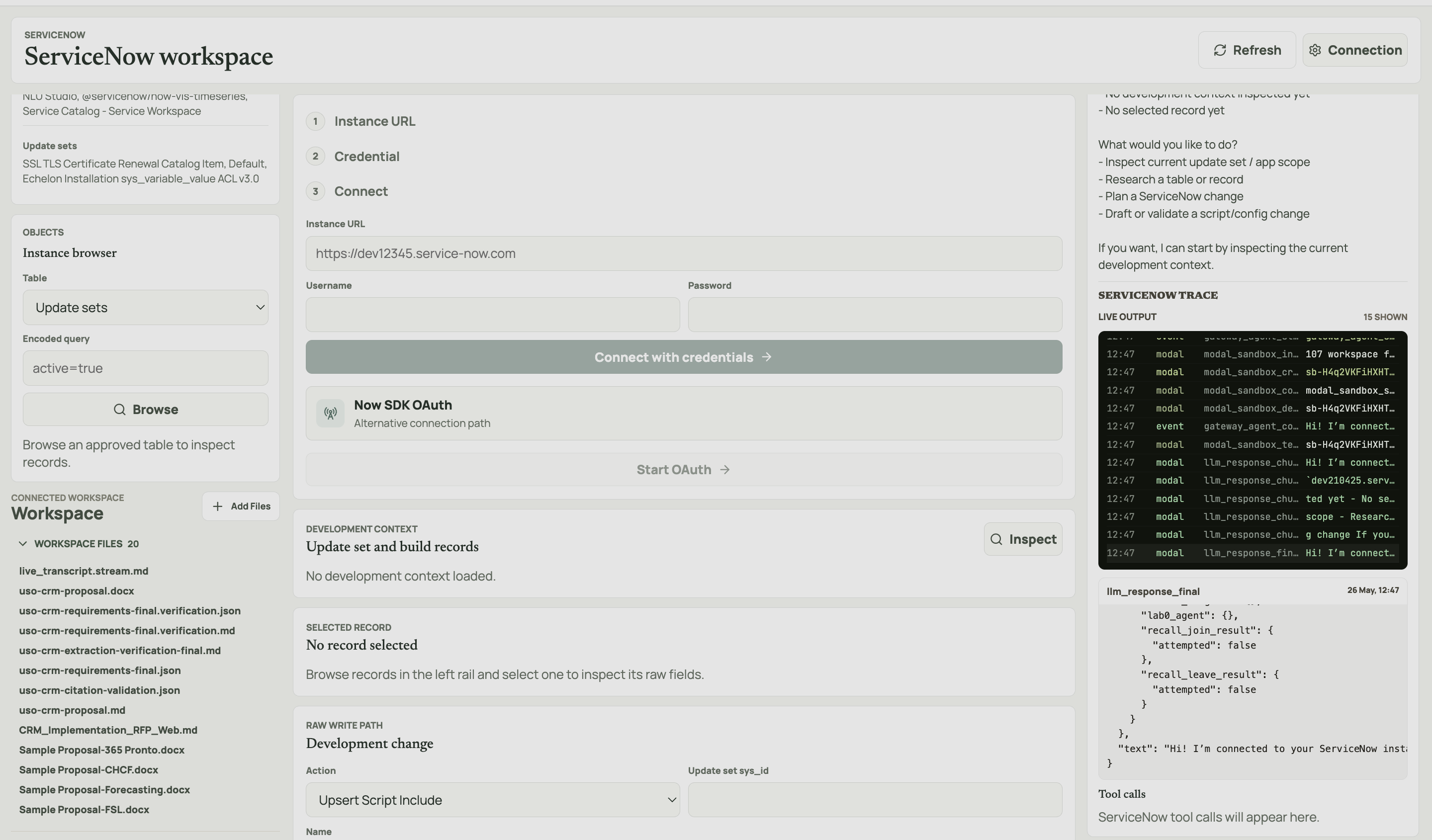
Config plane agent-assisted implementation with you in the loop
11 / story
The agent uses the workspace brief to propose implementation steps, show the work, and wait for approval before anything important changes.
12 / What delivery teams get
Less reconstruction. More implementation.
Lab0 makes the implementation state visible, answerable, and actionable.
context
One workspace briefCalls, files, channels, and evidence stay together
discovery
Known vs missingOpen questions become the next best actions
process
Visible data flowSystems, actors, and handoffs are mapped
artifacts
Evidence-backed outputsBRDs, specs, and runbooks trace to source context
agent
Scoped operatorThe agent works from the same account state
config
Work you can verifyPlans, changes, and runs stay reviewable
handoff
No re-briefingThe next person starts from the workspace
delivery
Fewer late surprisesGaps surface before the work gets stuck
Implementation teams should not rebuild the same context every week.
END FEATURE TOUR
lab0.ai